
The 120 Days of Bottrop (1997)
An eccentric homage to the Rainer Werner Fassbinder days of German filmmaking. ...
Watch Now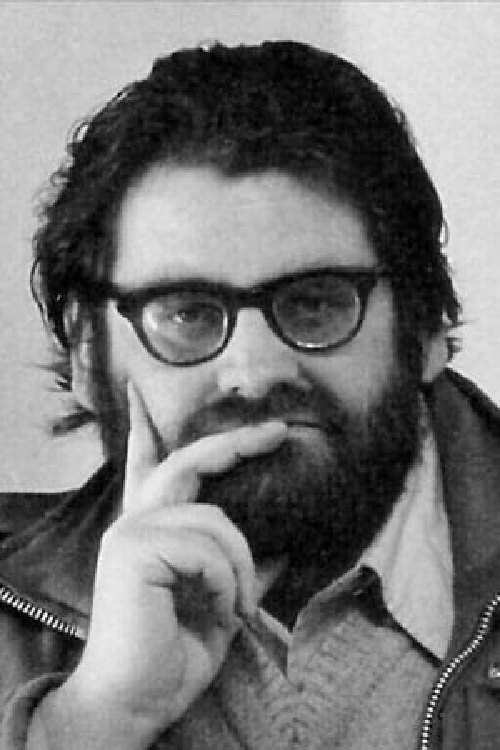
Kurt Kren was born in 1929 in Vienna, Austria from a Jewish father and a German mother. From 1939 till the end of World war II, Kren lived in Rotterdam, where he was sent to with one of the Children's transportation. In 1947 Kren returned to Vienna, and his father provided him a job at the National Bank.

An eccentric homage to the Rainer Werner Fassbinder days of German filmmaking. ...
Watch Now
Kurt Kren records snapshots of visitors to Vienna who are photographed in front of the statue of Johann Strauss Jr. ...
Watch Now
The making of pictures becomes the central issue in itself in that, with an analytical single-picture procedure, picture-taking tourists on Vienna's St. Stephen's Place are captured and their faces animated to a dance. ...
Watch Now
A commission by Austrian TV station ORF documenting the anniversary celebration for Kunststücke. ...
Watch Now
"It became easier to understand Kren's method of approaching film when he illustrated his matter-of-factness with a story: he was asked to shoot and deliver a film, for a festival, given four day's notice, which he did ('foot'-age shoot'-out'). He normally ...
Watch Now
Kurt Kren recorded the last television debate in the Reagan/Mondale election campaign. In the viewfinder, the television filled the entire picture, but the viewfinder did not match the lens entirely so that the television screen in the picture was very lit ...
Watch Now"In 1983, I got a job as a museum attendant and abandoned film-making entirely. And so the question arose: "no film?," and the conclusion I came to was: no film. Question mark." (K.K. ...
Watch Now
The third of the "bad home movies". Kren moved, along with his Thunderbird from New England in winter to the warmth of Texas. Part of the film was shot in Austin. ...
Watch Now
Kren in New Hampshire, New England. Together with friends he lived from the demolition of wooden houses and sale of the wood. Kren was the "nail puller". ...
Watch Now
Kren on his way from Vermont to California. Kren says that his various cars are the thread which runs through the story. ...
Watch Now
'It was in San Francisco at a punk festival. I was already high and the air was so thick in the rooms that you could cut it with a knife. I had a photograph camera with me; I stood in a corner of the entrance hall and took 36 pictures on slide film. At hom ...
Watch NowHans-Peter Hochenrath and Birgit Hein made a documentary film about me for the Saarland Network and wanted me to make a self-portrait. Instead of pointing the camera lens away from myself, I pointed it toward myself. I rewound the film over and over again ...
Watch Now
At the center are takes which do not change - a tree in a field in Vermont, U.S.A. Since the film was shot over a period of fifty days, the single frame shots create a storm of pictures. ...
Watch Now
This film shows, with the use of single-frames, Kren's diary-like notes from 1968 to 1976, especially his entries about the work on the three previous films. At the very end a fragment of a failed first attempt of Keine Donau (No Danube) is shown. The coff ...
Watch Now
I took a photograph of the view out of the window and had a very large negative made from it, which I fastened to the lens hood attacement in front of the camera. I tried to bring the negative into alignment with the real landscape which I could see throug ...
Watch NowA meadow, a lake, the silhouette of a hill, trees. 21 days of the same view in Saarland. 21 days with five different cut-outs in a mask before the camera, which finally reveals a complete panorama. The landscape changes with the advancing seasons and becom ...
Watch Now
A man's head is seen in silent close-up using single-frame shooting and time exposure. ...
Watch Now
In a TV film about the film Casablanca, Kren is meant to read aloud three letters that Groucho Marx wrote to Warner Bros., because they wanted to take legal action against him over A Night in Casablanca. The recorded material could not be used on televisio ...
Watch Now
Kren shows the cinema (mentioned in the title) during and after film presentations. He uses single-frame and time exposures 5 to 30 seconds long. Sometimes sunlight comes through the open door into the theater changing the colors in the film remarkably. Bl ...
Watch Now

Kren had composed a diary-like piece containing subtle irony with his 27/71 Auf der Pfaueninsel (On Peacock Isle). The lengthy titles which are one minute long, in which five people are ceremoniously introduced, are followed by only twenty seconds of pictu ...
Watch Now
Zeichenfilm - Balzac oder das Auge Gottes is a play on the idea of trick film. And trick film it is. The 30-second work is shown twice in case the viewer missed something the first time: in crude hand-drawn animation Zeichenfilm ... evokes the scatological ...
Watch Now
Kurt Kren films an anti-war poster in extreme close-up moves to subvert the quick responses of viewers to its loaded imagery. ...
Watch Now
Another try by the Viennese actionists around Otto Mühl, trying to shock the middle-class bourgeoisie with all sorts of explicit sexual and excretory processes. ...
Watch Now
A report about an Underground Festival on tour through Germany and Switzerland. ...
Watch Now
Kurt Kren filmed pieces of feature films in the cinema without looking through the viewfinder. The missing sexual climax from the cinema was added by Kren in the form of insights and views from Otto Muehl's Libi Aktion. ...
Watch Now
Kren filmed, in microscopic detail the reflection and refraction of the light in/on a glass bottle. However, the bottle itself (the whole body) is never seen. What is seen is much more the emanations of light from the glass and its clarity. ...
Watch Now
An experimental and bizarre shooting of an association between the sexes. ...
Watch Now
Kurt Kren films a photo which shows an SS officer standing on a town square which is littered with dead bodies. ...
Watch Now
Four men, one woman and a cat in a room. The men drink and discuss. Things get a bit violent. The masochist acts out his desires by himself. Random fuss and sex occurs. Suddenly the woman gets her baby to change diapers. Odd things around the child. The ca ...
Watch Now
Kren frames the image to suggest a proscenium, with a view to the harbor that conveys a literal sense of "tele-vision". The static framing of the image and the clearly stratified mise-en-scène can hardly provoke interpretation. The sight of the girls does ...
Watch NowA collage of many visuals. A man urinates; a man has a drink. A man defecates; someone eats a meal. 16/67 September 20: 'The Eating Drinking Shitting Pissing Film'. ...
Watch NowSinus Beta is almost a sort of teaching film about bodily behavior in different situations. The film also produces, through the heterogenic photographic materiality of the primary elements, a cross-section of the methods, used in capturing the body in a st ...
Watch Now
Kren's last film to include any direct reference to Otto Muehl is 12/66: Cosinus Alpha, a 10-minute film that completes a cycle of elaborate sensual montages and materials. ...
Watch Now
Kren's 10/65 Selfmutilation is developed from a Gunter Brus "action". What the film emphasizes is the surrealistic drama of symbolic self-destruction that Kren drew out of Brus' action, pacing out each gesture so that one gets a tense, iconoclastic revelat ...
Watch Now
"Action" by Günter Brus. At first Kren did not want to show the film, because the image is underexposed. A copy of the negative material turned out to be better than the original material and so Kren did show the film. The film's title relates to Brus' us ...
Watch NowA kind of home movie made in Brus' apartment. Brus' Christmas wishes can be seen on a poster which he painted and which he holds for a short time in front of the camera. ...
Watch Now
11/65 Bild Helga Philipp is an optical abstraction of an optical abstraction: Kren has simply intercut filmed movements and sections from an Op painting by Helga Philipp - the result is motion opticals. ...
Watch NowThis three-minute film was far more akin to the American-style "happening" in that the content was not particularly extreme. It was built up from items such as broken bicycle parts, a nude model, pieces of furniture, and these elements were then obscured o ...
Watch Now
Based on a Muehl Happening. The almost convulsive use of juxtaposition reappears here, but the captured gesture assumes a more erotic sensitivity, though the "action" itself was primarily a gradual destruction of the erotic. ...
Watch Now
In the first action he filmed, 6/64 Mama und Papa, Kren's editing leads to many interlocking continuous shots; central takes recur like a leitmotif, circular motion and networking can be observed throughout the film. Kren painstakingly weaves the fury in f ...
Watch Now
In 9/64 O Christmas Tree Kren offers a more visually descriptive development of a Muehl "action". The images have been chosen to follow a more dramatic sequence, probably because the action itself contained a wide range of images and materials. ...
Watch Now
Almost as if entering the picture frame by chance, mute characters lean out of Viennese apartment windows, simply to have a look. ...
Watch NowThe film uses slides - photographic planes - which show different surfaces and finishes of a wall, which have been erroded by time. Kren stacks the positives and negatives of these pictures quickly one after the other, so that a moving relief-type structur ...
Watch NowThe first embodiment of (a) concept of structural activity in cinema comes in Kren's Bäume im Herbst, where the camera as a subjective observer is constrained within a systematic or structural procedure, incidentally the precursors of the most structurali ...
Watch NowKren's second film and the first he cut according to a strictly serial, sequence technique: in various frame sizes, the 48 portraits from the Szondi Test for "experimental diagnosis of human impulses" are shown in pre-specified lengths (between one and eig ...
Watch NowMostly dark, rejecting images which are repeated. A stone wall, the chamber of a revolver which is, at first not recognizable, a close-up of a cactus. The duration of the takes emphasises the photographic character of the pictures, simultaneously with a cr ...
Watch Now

A "stroll" at various locations: the St. Marx Cemetery, the Prater park, Carnuntum. We see people taking walks, construction workers, people flying model planes and other little observations. Kren also used a short segment of found footage in colour which ...
Watch Now

A portrait of the Austrian avant-garde artist Otto Mühl/Muehl (1925-2013), whose work combined sex, violence, gastronomy and bodily effluence with unbridled abandon. ...
Watch Now
Jonas Mekas assembles 160 portraits, appearances, and fleeting sketches of underground and independent filmmakers captured between 1955 and 1996. Fast-paced and archival in spirit, the film celebrates the avant-garde as its own "nation of cinema," a vital ...
Watch Now
A homage to the Austrian experimental filmmaker Kurt Kren, his two films "1000 Years of Cinema" and "Snapspots" and his way of working; and that with a slight wink. ...
Watch Now
On the 28th of October 1884 Daniel Paul Schreber, candidate of the National Liberal Party in Chemnitz, suffered a heavy defeat at the elections of the German Reichstag. He was taken up in the mental clinic of the Leipzig University soon afterwards. To his ...
Watch Now


A guy having sex with a woman on a rooftop – just to get her coffee-machine. ...
Watch NowHans-Peter Hochenrath and Birgit Hein made a documentary film about me for the Saarland Network and wanted me to make a self-portrait. Instead of pointing the camera lens away from myself, I pointed it toward myself. I rewound the film over and over again ...
Watch NowIn a TV film about the film Casablanca, Kren is meant to read aloud three letters that Groucho Marx wrote to Warner Bros., because they wanted to take legal action against him over A Night in Casablanca. The recorded material could not be used on televisio ...
Watch Now
"This film is an attempt in focusing. I visited Kurt Kren in Vienna. (Kurt Kren is considered to be the father of the European underground film.) Kurt Showed me lots of documents, papers and letters, all about the fights he had with many restaurant owners ...
Watch Now
Ludwig Schönherr | Federal Republic of Germany | 1969 | 18 fps | 3'25" | silent ...
Watch NowA kind of home movie made in Brus' apartment. Brus' Christmas wishes can be seen on a poster which he painted and which he holds for a short time in front of the camera. ...
Watch Now© 2026 Imperial Flixano Broadcasting